Reverse Osmosis Explained: How It Works and Who Needs It
A simple explanation of reverse osmosis technology and how to know if it is right for your home.
Brooke
Water Treatment Specialist
Reverse osmosis (RO) is one of the most effective water purification technologies available for home use. But how does it work, and is it right for your home?
How Reverse Osmosis Works
At its core, reverse osmosis is simple: water is pushed through a semi-permeable membrane that blocks contaminants while allowing water molecules to pass through.
The Process Step by Step
-
Pre-filtration: Water first passes through sediment and carbon filters to remove larger particles and chlorine that could damage the RO membrane.
-
The RO Membrane: Water is forced through an extremely fine membrane (0.0001 microns). This membrane blocks contaminants but allows water through.
-
Storage: Purified water is stored in a small tank under your sink, ready when you need it.
-
Post-filtration: A final carbon filter polishes the water before it reaches your glass.
-
Drain: Rejected contaminants are flushed down the drain.
What Does RO Remove?
Reverse osmosis is remarkably effective at removing:
- Lead and heavy metals
- Dissolved salts and minerals
- Nitrates and nitrites
- Fluoride
- Arsenic
- Bacteria and viruses
- Most organic compounds
- Chlorine and chloramines
- Bad tastes and odors
In fact, a quality RO system removes 95-99% of dissolved contaminants.
Who Benefits Most from RO?
Families with Babies or Young Children
Children are more vulnerable to contaminants. RO provides peace of mind for formula mixing and drinking water.
Well Water Users
Well water often contains contaminants that are difficult to remove other ways. RO handles nitrates, arsenic, and other common well water issues.
Those with Health Concerns
Anyone with compromised immunity or specific health concerns may benefit from the extra purification RO provides.
People Who Taste Chlorine
If you dislike the taste of tap water, RO produces noticeably cleaner, better-tasting water.
Coffee and Tea Enthusiasts
Serious coffee and tea lovers notice the difference RO water makes in their beverages.
Common RO Questions
Does RO waste water?
Traditional RO systems use 3-4 gallons of water for every gallon produced. Newer high-efficiency models reduce this significantly. Either way, RO is still far more economical than bottled water.
Do I lose beneficial minerals?
RO does remove minerals along with contaminants. However, you get most minerals from food, not water. Some systems include remineralization filters if desired.
How often do filters need replacement?
Typically, pre and post filters are replaced annually, while the RO membrane lasts 2-3 years. Your system will include guidelines.
How much water does it produce?
Most home systems produce 50-100 gallons per day - more than enough for drinking and cooking needs.
RO vs. Other Filtration
Pitcher Filters
Remove chlorine taste and some contaminants, but far less thorough than RO. Good for basic improvement, not comprehensive purification.
Faucet Filters
Similar to pitchers. Convenient but limited contaminant removal.
Whole House Filters
Treat all water entering your home but typically use simpler filtration. Great for sediment, chlorine, and general improvement.
Water Softeners
Address hard water minerals specifically. Often paired with RO for comprehensive treatment.
Installation Considerations
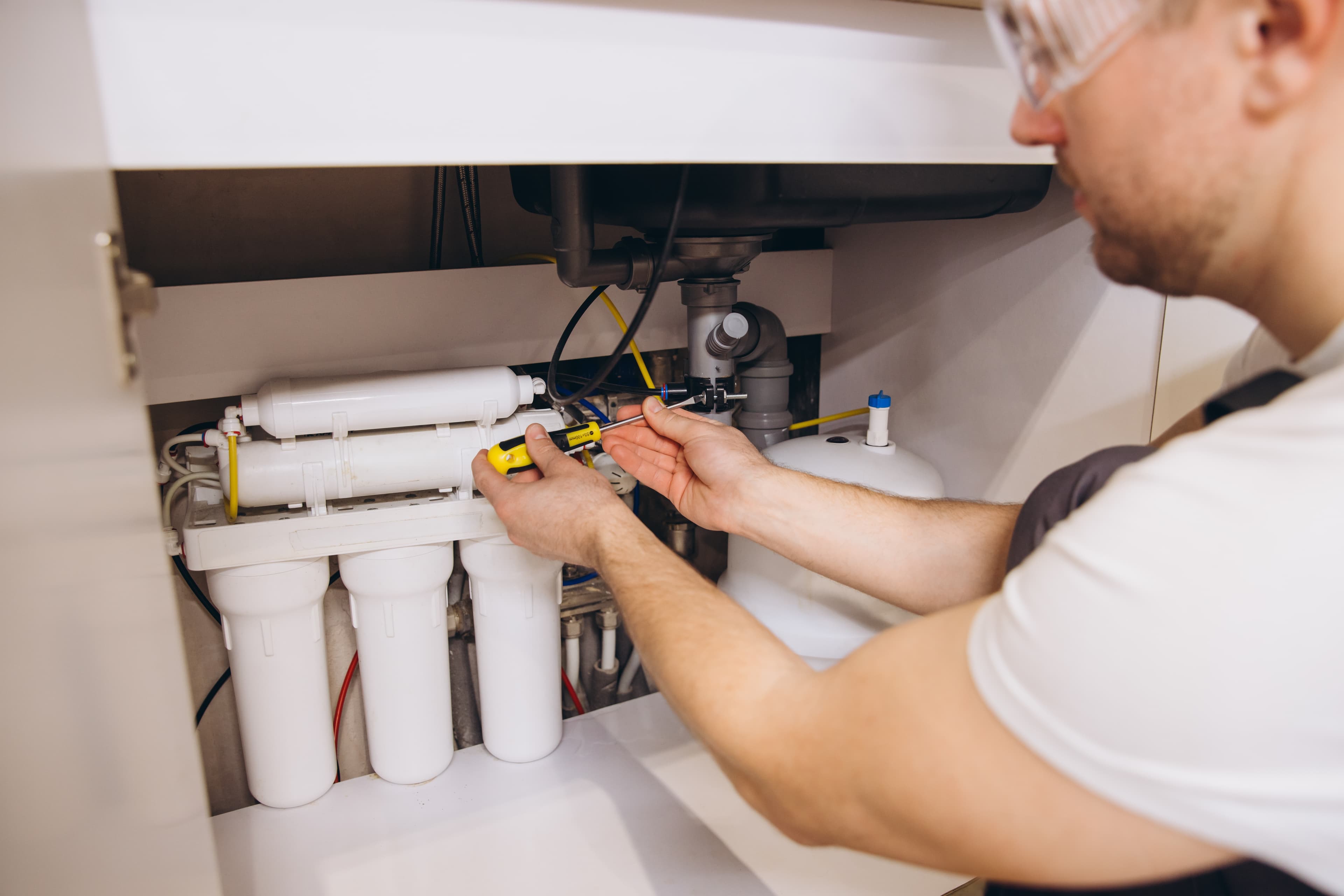
RO systems are typically installed under the kitchen sink with a dedicated faucet. Installation requires:
- Space under the sink for the system and storage tank
- Connection to the cold water line
- Drain connection for waste water
- Optional refrigerator line connection for ice and water
Professional installation ensures proper setup and optimal performance.
Is RO Right for You?
Consider reverse osmosis if:
- You want the purest possible drinking water
- You have specific contaminant concerns
- You dislike the taste of your tap water
- You have well water with known issues
- You want to stop buying bottled water
A water test is the best way to know what is in your water and whether RO makes sense for your situation.
Ready to Improve Your Water?
Get a free, no-obligation water test and see exactly what is in your water.